
Santa Barbara County Resident Lookup Scope
Different records answer different parts of a Santa Barbara County one-person search. A parcel result may show an APN and situs. A deed names parties to an instrument. A court index shows a party role and case context. A vital record documents an event under California copy rules. A license or business record shows an official role. Custody tools cover only their named population. A reported unclaimed-property record is a lead, not proof of present location.
| Record | What It Confirms | Where | Access |
|---|---|---|---|
| Parcel or deed | Title name, document date, situs, legal description | Assessor and Clerk-Recorder | Address/APN lookup; index and paid copies |
| Voter record | Status, precinct, or approved address fields | California SOS and County Elections | Self-check or restricted application |
| Superior Court | Party role, caption, case type, file date, case number | Santa Barbara Superior Court | Free index; terminals and copies |
| Vital record | Birth, death, marriage, or divorce evidence | County, CDPH, or court | Eligibility and copy rules apply |
| Business or license | Entity, agent, credential, status, or filing | California SOS and DCA | Free index; some orders paid |
| Custody locator | Current custody in one system | Sheriff, CDCR, or BOP | Free system-specific search |
| Unclaimed property | Reported owner name and reporting clue | California State Controller | Free official claim search |
The coverage table is a routing map. It does not suggest that every person appears in every row. A protected address, sealed record, confidential voter, or absent occupant can leave no public result.
The State Controller's name-keyed search is a useful example of a lead that needs its own claim process:
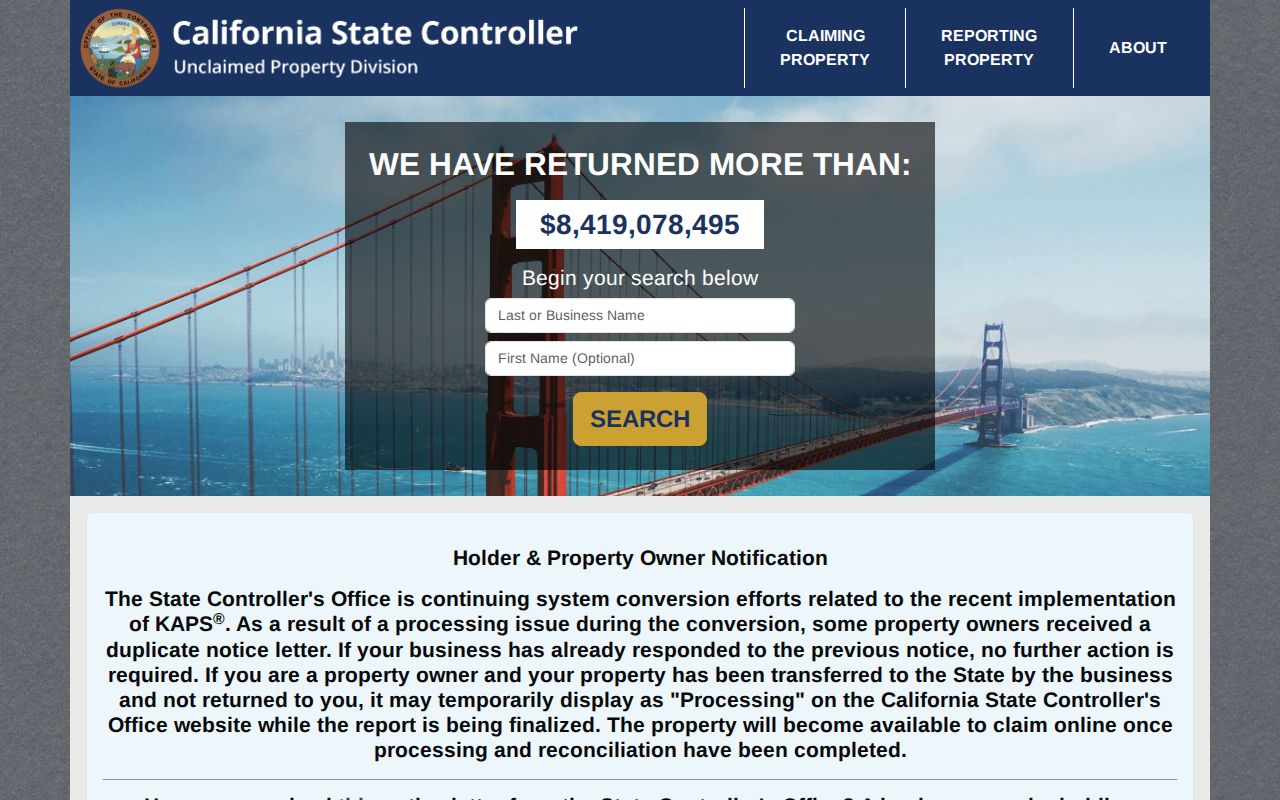
A reported property record does not prove a current address or identity. Keep the name variant and claim path beside any result.
Note: A name match grows stronger when role, date, geography, and record type align across two independent custodians.
Build a Santa Barbara County Resident Match
A strong Santa Barbara County resident lookup uses one source to find a lead and another to test it. Begin with a full name, former name, middle initial, suffix, or business variant. Add a known community or date range, but do not force a match because a name looks familiar. Compare the relationship shown by the record, the time of filing, the address type, and the custodian's scope.
A recorder party may be a grantor, grantee, lien party, trustee, or representative. A court party may be a plaintiff, defendant, petitioner, or business. A license result may be current, expired, suspended, or disciplined. A tax mailing address can differ from situs. These are useful distinctions, not small details.
When a name appears in two sources, preserve both citations. A current record and an old directory entry can belong to two people with the same name. A deed and a court case can refer to the same person but different addresses. The match becomes stronger when name, date, role, and geography align.
Note: An APN or mailing address can guide a search, but neither clue alone proves that someone lives at the property.
Search Santa Barbara County Resident Names
The Santa Barbara Superior Court case-records gateway routes the public to a usage agreement and Smart Search. The index is informational, not the official record, and remote display rules limit documents in some case categories. Search surname, first name, middle name, suffix, business name, and spelling variants. Former Superior and Municipal Court unification means one person or company may have more than one case number.
The official index layouts are unusually useful for planning a search. Criminal data can include last name, second last name, first, middle, suffix, party type, case type, case number, file date, and FileID. Civil, probate, and small-claims data can add caption and filing category. Compare party role, caption, filing date, and case type before deciding that a hit belongs to the person sought.
The portal and a public ruling sample show what a court result can contain:
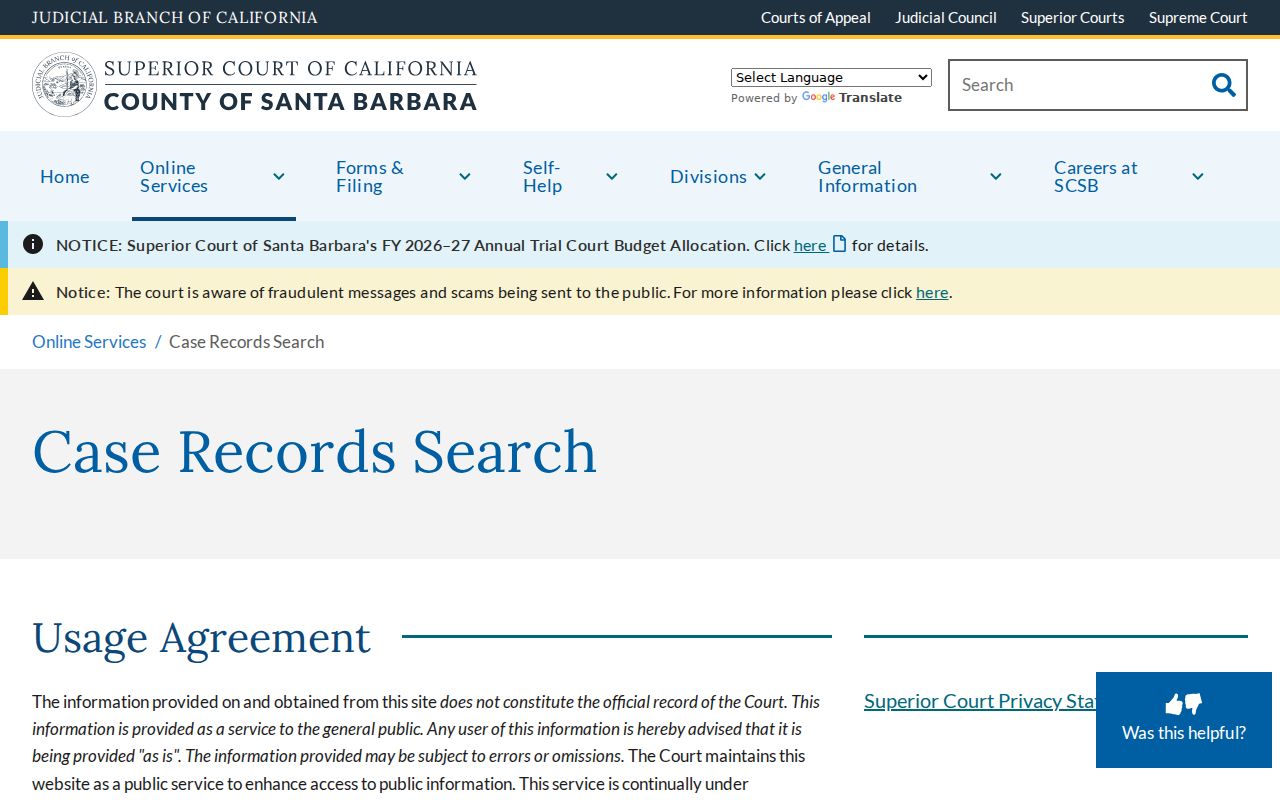
| Case number | The court identifier for retrieving a file or requesting a copy. |
|---|---|
| Caption | The named case context, useful for separating similar parties. |
| Party role | The person's relationship to the case, not proof of residence. |
| File date | The date the case entered the index. |
| Ruling detail | A public ruling may show hearing context, requested relief, analysis, and disposition, but it is not a full register of actions. |
Public terminals at the South Figueroa division and North County lobbies can provide lawful material that is not remotely displayed. Records staff can explain copy, certification, mail, and off-site file limits.
Verifying a Santa Barbara County Resident's Records
Verification means anchoring a name to a date and record relationship, then checking a second custodian. An address is helpful, but its type matters. Situs locates a parcel. Mailing address receives correspondence. A service address may belong to a business or agent. A directory residence is a publication-year clue.
- Write every name variant and the question it is meant to answer.
- Search the most direct official index, such as court, recorder, business, license, or vital records.
- Capture the case number, APN, document number, issue date, status, or other stable identifier.
- Compare the lead with a second source from a different custodian, using the same date and geography.
- Contact the originating office when an image, certified copy, correction, or confidentiality rule changes the conclusion.
- Docket
- The court's running case record or register of filings and events.
- Index versus image
- An index points to a record; the image or file contains the underlying document.
- Certified copy
- A custodian-certified reproduction with a formal evidentiary status and a fee or eligibility rule.
- Disposition
- The recorded outcome or status of a case event, not a summary of a person's character.
- APN
- The Assessor's parcel identifier used to connect an address to land records.
For a one-person search, the goal is a narrow, sourced conclusion. “The record shows” is safer than “the person is” when the source only supplies an indirect clue.
Note: Certified copies and informational copies serve different purposes, and the issuing custodian controls eligibility, redaction, and fees.
Santa Barbara County Resident Property Records
The Assessor lookup accepts APN or situs address, not an owner name. It can return a normalized address, parcel number, value notice, and map link. The recorder then searches the owner or party name through deeds, liens, maps, and other filings. The public GIS layer documents APN, situs fields, an owner-name field, and a county Assessor web link, but raw service metadata and public viewer display are not identical.
Ownership evidence and residence evidence are different. A recorded deed identifies an interest in land. The tax mailing address is correspondence destination. A property result may show assessment characteristics but not every mailing or exemption detail. Confirm what the particular result lawfully displays, and use a deed or custodian request for a question the anonymous portal does not answer.
For an old address, the parcel and legal description are stronger anchors than a street number alone. APNs can change after a split or merger. A map, tract, lot, historical APN, and deed description can preserve the connection when the address was renamed or renumbered.
Santa Barbara County Resident Business Roles
A business or professional result can help distinguish a name, but it answers an official-role question. bizfile Online searches California entities by name or number. Basic search contains a keyword and defaults to active entities; advanced search adds starts-with logic, inactive status, and entity type. Results can show entity number, registration date, jurisdiction, status, and filing history.
The Department of Consumer Affairs license search can search board, license type or number, business, first or last name, and registry options. Separate boards may add city, county, discipline, document, practice, or specialty filters. A result may be current, expired, suspended, revoked, or disciplined. Its address can be a practice, mailing, or business location.
County fictitious business-name filings add another local source. The county does not issue a business license, and an FBN registrant, agent, license holder, and actual individual may be different people. Keep the role and filing date beside the name before using it as a resident clue.
Santa Barbara County Resident Vital Records
California does not use a blanket rule that birth records become public after 100 years or death records after 50. Santa Barbara County reports local births, deaths, and marriages from 1850 to the present under event and license rules. CDPH statewide birth coverage begins in July 1905. A divorce file belongs to the Superior Court, while CDPH can provide a state certificate or amendment route.
An authorized certified copy is limited to qualifying relationships, government or legal roles, or court authority. A mailed authorized request uses a sworn statement and notarization. An informational certified copy is more broadly available, carries an identity-use warning, and may redact protected material. Confidential marriage records are limited to a spouse or court-authorized person. Adoption birth records remain sealed under their own rules.
- Birth
- County local event from 1850; CDPH statewide from July 1905; 2026 state fee $31.
- Death
- County local event from 1850; informational or authorized copy; 2026 state fee $26.
- Public marriage
- County license from 1850; authorized or informational copy; 2026 state fee $19.
- Divorce
- Superior Court file, with public and sealed portions controlled by court rules.
The CDPH Vital Records page provides forms and statewide access rules. Use a historical newspaper, church register, cemetery record, or archive as a lead for an older event, then pair it with a second source.
Santa Barbara County Resident Heirs
Probate can connect a deceased person, petitioner, heir, executor, and property, but the public case index is only a starting point. Search the Superior Court with name variants, then compare case type, caption, filing date, and case number. Public filings may name a petitioner or heir. Sealed material, confidential family details, and unavailable images remain outside the search.
Pair the probate lead with a death record, obituary, deed, and vital record. An obituary can give family relationships, but archive permanence varies. A deed can show transfer of land without listing every household member. A property mailing address can belong to an estate representative or another address.
When an heir question reaches a legal decision, request the official file or consult the custodian's procedure. A directory or unclaimed-property record can suggest a name but cannot replace the probate record.
Santa Barbara County Custody Systems
Custody tools cover different populations. The Santa Barbara County Sheriff lookup covers current county custody. The California CDCR locator covers state-prison records. The federal BOP locator covers federal custody, while PACER is a federal case system. A result or absence in one does not answer the other system's question.
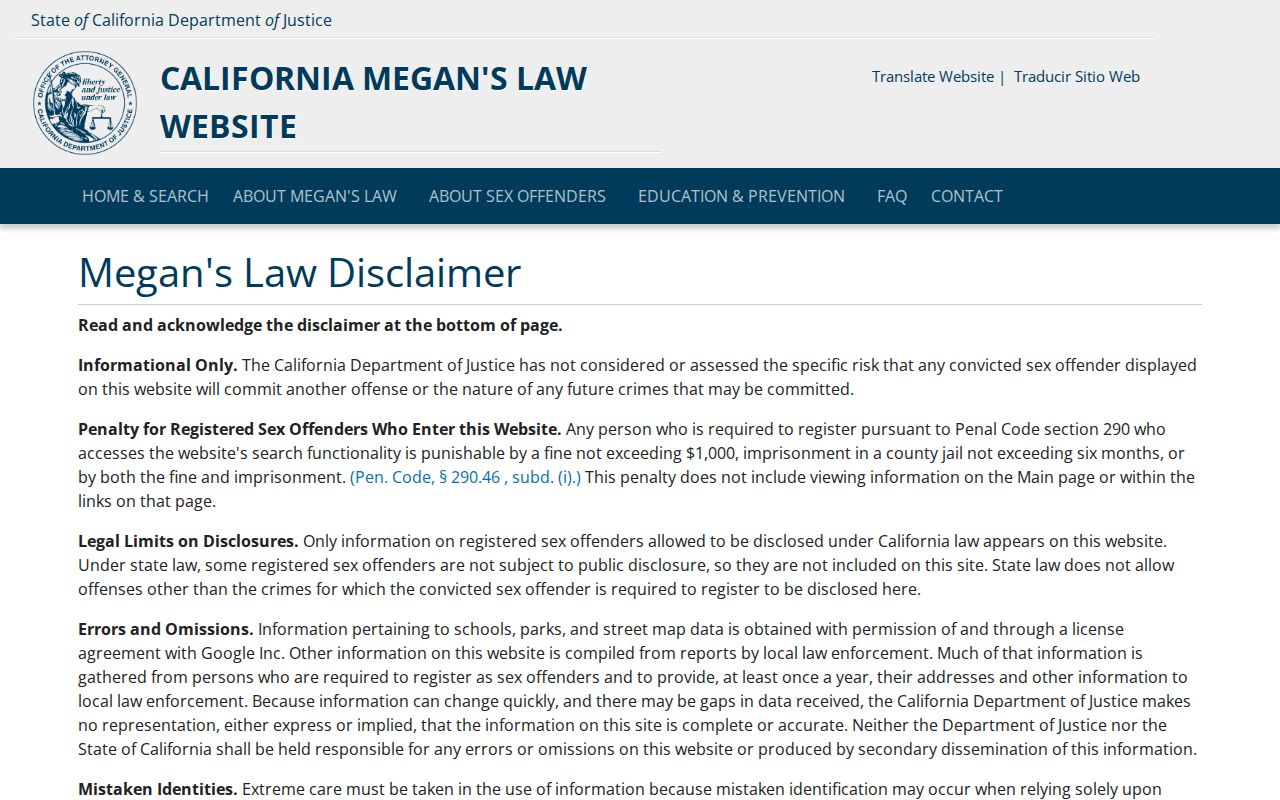
The California Megan's Law search is a separate disclosure registry with name, city, county, ZIP, and vicinity options. Its results can include aliases, physical description, photo, registrable convictions, and address information as the law permits. Not every registrant appears, and Penal Code section 290.46 sets use limits.
These public interfaces are useful only when their scope is read first:
| System | Population | Typical Result | Limit |
|---|---|---|---|
| County Sheriff | Current county custody | Name, age, CID, facility, court date, bail, status | Not a full criminal history |
| CDCR CIRIS | State-prison population | Name, CDCR number, location, admission, parole details | Not county jail |
| Federal locator | Federal inmates from 1982 | Name, register number, age, location, release date | Not state or county custody |
| Megan's Law | Disclosure-eligible registrants | Identity, description, photo, and location as allowed | Statutory exclusions and use rules |
The federal PACER Case Locator image shows the separate federal case route:
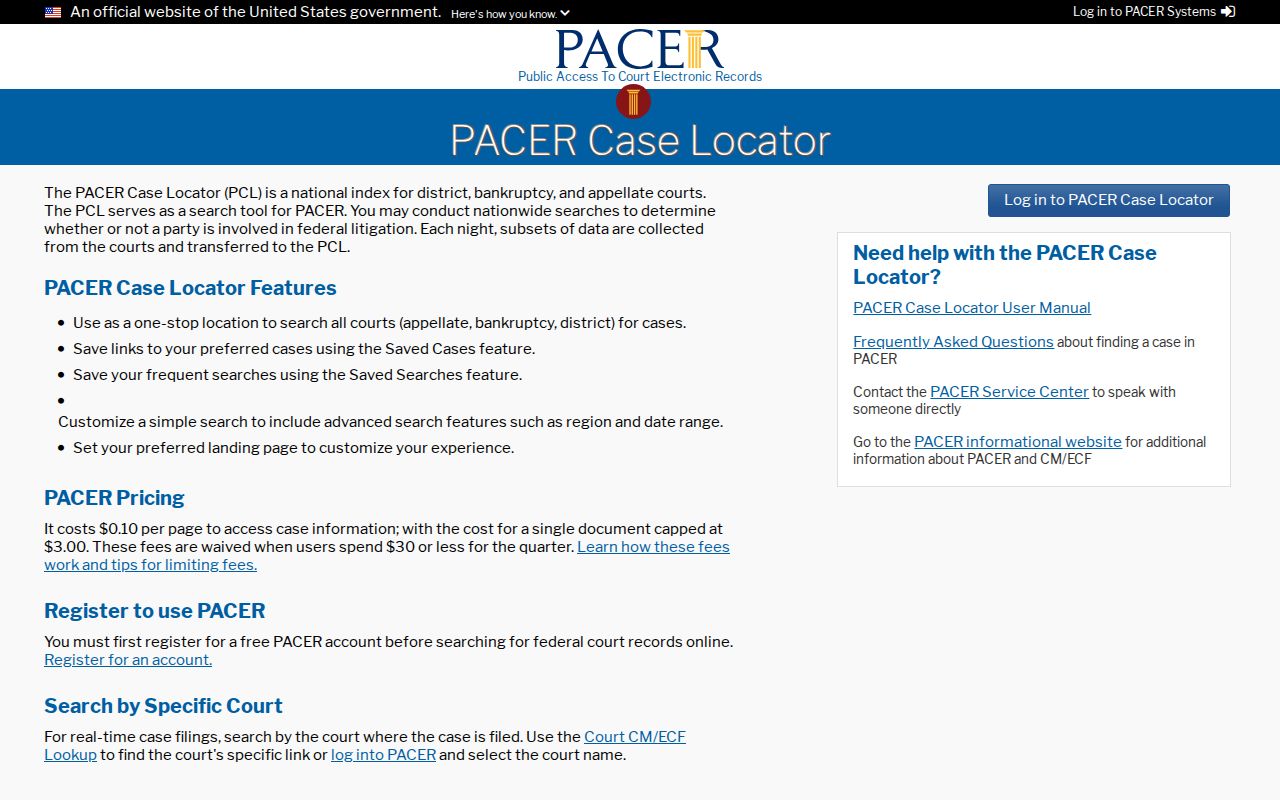
Note: Custody, offender, court, and vital systems have separate populations, so an absent result is not a cross-system answer.
Santa Barbara County Adoption Privacy
Adoption information does not become an ordinary public person search. California sealed adoption birth records require an official CDSS, CDPH, mutual-consent, or court process. A public court search cannot substitute for that process. The same boundary applies when an old family clue points to a birth parent or adoptee.
Use the official state program for identity, consent, and contact rules. A directory, obituary, business filing, or property record may offer context, but it cannot authorize disclosure of a sealed record or a private address.
A source correction belongs with the source custodian. Save the exact URL, document number, case number, or index citation, then ask the Assessor, Elections office, court clerk, licensing board, or Secretary of State about that office's correction process. Correcting a commercial copy does not correct the originating record.
Santa Barbara County Resident Lookup Limits
California protects voter identifiers, DMV residence addresses, Safe at Home substitute addresses, sealed adoption records, confidential marriage records, and portions of court files. CPRA requests do not override those rules. A missing result may mean the record is protected, not that the person is absent.
Use a name-and-record search for personal, lawful research such as family history, reconnecting, estate work, civic records, or verifying a public filing. Penal Code section 646.9 addresses stalking, and civil harassment orders are available under Code of Civil Procedure section 527.6. Keep a private address private and avoid publishing a person's record simply because a portal made one field visible.
A responsible search ends with a source, date, record relationship, and clear limit. It does not turn a name hit into a statement about a person's current life.